
REGIONAL INFORMATION:
Steiermark / Austria
Area: 16.391 km²
GDP (PPS per inhabitant): 25.400
GDP Index EU 27: 107,6
Automotive industry/clusters, Eco-Technology development, Winegrowing, Construction industry, Tertiary sector, Tourism, Metal production and metal-working industry, Wood processing, Food-processing industry
If you are not yet a member you can register here.
| I3SME | INTRODUCING INNOVATION INSIDE SMEs | |
 |
Regional partner(s): |
|
| PROINCOR | Proactive Innovation Support for SMEs in the Corridor from the Baltic to the Mediterranean Sea | |
 |
Regional partner(s): | |
| C-PLUS | IMPLEMENTING WORLD-CLASS CLUSTERS IN CENTRAL EUROPE | |
 |
Regional partner(s): | |
| CEBBIS | Central Europe Branch Based Innovation Support | |
 |
Regional partner(s): | |
| FLAME | Future Laboratory for the Diffusion and Application of Innovation in Materials Science and Engineering | |
 |
Regional partner(s): | |
| CNCB | Cluster and Network Cooperation for Business Success in Central Europe | |
 |
Regional partner(s): | |
| IDEA | Innovative Development of European Areas by Fostering Transnational Knowledge Development | |
 |
Regional partner(s): | |
| NANOFORCE | Nanotechnology for Chemical Enterprises – how to link scientific knowledge to the business in the Central Europe space | |
 |
Regional partner(s): | |
| WOMEN | Realising a Transnational Strategy against the brain-drain of well-educated young women | |
 |
Regional partner(s): |
|
| BATCo | Baltic-Adriatic Transport Cooperation | |
 |
Regional partner(s): |
|
| BICY | BICY – Cities & Regions of Bicycles | |
 |
Regional partner(s): | |
| SOL – Save Our Lives | SOL – Save Our Lives. A Comprehensive Road Safety Strategy for Central Europe | |
 |
Regional partner(s): |
|
| EMPIRIC | Enhancing Multimodal Platforms, Inland waterways and Railways services Integration in Central Europe | |
 |
Regional partner(s): | |
| ESSENCE | Easy eServices to Shape and Empower SME Networks in Central Europe | |
 |
Regional partner(s): | |
| ACT CLEAN | Access to Technology and Know-how in Cleaner Production in Central Europe | |
 |
Regional partner(s): | |
| SALVERE | Semi-natural grassland as a source of biodiversity improvement | |
 |
Regional partner(s): | |
| RUBIRES | Rural Biological Resources | |
 |
Regional partner(s): | |
| TransWaste | Formalisation of informal sector activities in collection and transboundary shipment of wastes in and to CEE | |
 |
Regional partner(s): | |
| REZIPE | Renewable Energies for Zero Emission Transport In Europe | |
 |
Regional partner(s): | |
| INARMA | Integrated Approach to Flood Risk Management | |
 |
Regional partner(s): |
|
| SEBE | Sustainable and Innovative European Biogas Environment | |
 |
Regional partner(s): | |
| GreenNet | Promoting the ecological network in the European Green Belt | |
 |
Regional partner(s): | |
| MANERGY | Paving the way for self-sufficient regional energy supply based on sustainable energy concepts and renewable energy sources | |
 |
Regional partner(s): | |
| CERREC | Central Europe Repair & Re-use Centres and Networks | |
 |
Regional partner(s): | |
| CEP-REC | Introduction of Regional Energy Concepts | |
 |
Regional partner(s): |
|
| CEEM | Central Environmental and Energy Management as a kit for survival | |
 |
Regional partner(s): | |
| PRESOURCE | Promotion of Resource Efficiency in SMEs in Central Europe | |
 |
Regional partner(s): |
|
| ACT4PPP | Transnational Action for Public Private Partnership | |
 |
Regional partner(s): | |
| ReSOURCE | Utilisation of post-mining potentials for sustainable re-development in Central European mining cities and regions | |
 |
Regional partner(s): | |
| CIRCUSE | Circular flow land use management | |
 |
Regional partner(s): | |
| YURA | Developing transnational transversal youth strategies in regions with migration | |
 |
Regional partner(s): | |
| CE-Ageing Platform | Central European Knowledge Platform for an Ageing Society | |
 |
Regional partner(s): | |
| EPOurban | Enabling Private Owners of Residential Buildings to Integrate them into Urban Restructuring Processes | |
 |
Regional partner(s): | |
| EURUFU | European Rural Futures – New opportunities to secure the provision of public sevices in rural cities and municipalities | |
 |
Regional partner(s): |
|
| CCC | Cultural Capital Counts | |
 |
Regional partner(s): | |
| THETRIS | THEmatic Transnational church Route development with the Involvement of local Society | |
 |
Regional partner(s): |
|
| SHIFT-X | Employing cultural heritage as promoter in the economic and social transition of old-industrial regions | |
 |
Regional partner(s): |
|
| CITY REGIONS | Increasing the competitiveness of city regions through integrated urban-rural development | |
 |
Regional partner(s): |
|
YURA – Learning Partnership in Styria (AT)
Region of Styria is facing the shortage of scientists and graduates from technical universities (especially the demand increases in the fields of mechanical engineering, electrical engineering, materials science, metallurgy and chemical engineering). To solve this problem, the professional orientation of young people has to be supported. Many young people still have a very limited range in the choice of their future profession and receive just very little or no information at all about technical professions. Additionaly, most pupils don’t really know about the leading companies and other SMEs in the region they live in. This was the reason why the region of Styria started to tackle this problem together with companies from metal and electronic industries.
The objective of the “Learning Partnerships” is to bring pupils closer to a vocational training or an employment in their region by focusing on a practical orientated approach. Therefore, regular learning subjects in schools will be combined with additional learning elements and a close practical relation to companies and their specific working field. The overall aim is to jointly develop a methodology and to test it in the participating regions together with schools and companies.
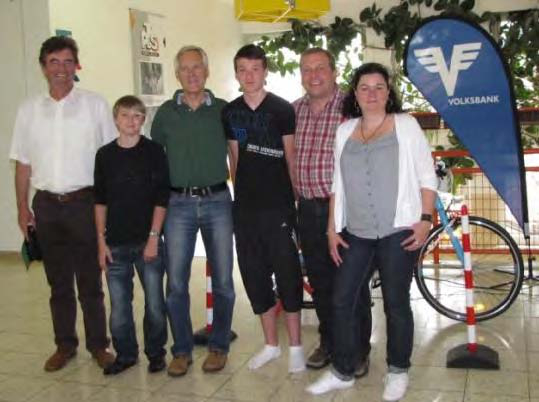
The kick-off workshop “Learning Partnerships” was split into two events: The first part was a workshop to define the methodology of the pilot action to all participating partners. The second part was a field trip to look at an already existing best practice.
Implementation of the cooperation
The mutual cooperation will be build upon joint projects of schools and companies, thematically focusing on the branch of the participating company.
- In the six project regions at least one “Learning Partnership” will be installed
- Transnational network and cooperation of the schools was established
Outputs
- Case studies and other inquiries indicated a limited knowledge of young pupils on leading companies and other SME´s in their own Region
- The specific demand will be important for each Region– beside of inquires in companies it could be useful to get data of the regional job centers
- Motivation of teachers has to be tackled and increased
CIRCUSE – Managing brownfields in Voitsberg Region (AT)
Region Voitsberg
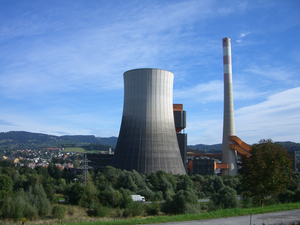
The pilot region Voitsberg is located about 30 km west from the City of Graz. It includes the municipalities of Voitsberg, Baernbach, Maria Lankowitz, Koeflach and Rosental. The region holds around 29.000 inhabitants.
Regional Challenges
The demographic change will have an impact in the region Voitsberg. The amount of inhabitants will be more or less constant with 28.400 inhabitants to 2050. But the age structure will change significantly. In comparison to 2010 the region will have in 2050 less teenager (17%), less employed people (17%) and the percentage of elderly will rise up (64%). Between 2003 and 2010 the amount on building areas rose about 10% and streets for car traffic about 4% – but in the same time the number of inhabitants was reduced by 3%. Results are: sealing of areas and more traffic – less inhabitants have to finance more infrastructures!
Sustainable Future
To achieve sustainability, the region Voitsberg will support:
– Innovations from the region
– Reuses of brownfields
– Renewable Energy
– Safety of natural landscapes
Activities
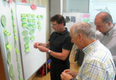
The formation of the land management agency is a result of the workshop “Future Land Use in the Region Voitsberg” held in 2011. Various actors from the region have participated in the workshop. The workshop consist of six modules: 1 Land consumption, 2 CircUse Principle 3 Land potentials and scenarios, 4 Stakeholders, 5 Instruments and 6 Action plans.
Founding of an Agency
Municipalities work together and have founded in November 2012 the first land management agency of Austria. Members of the land management agency are the municipalities Baernbach, Koeflach, Maria Lankowitz, Rosental and Voitsberg. It is planned that the agency starts with operational work in beginning of 2013.
Objectives of the Agency
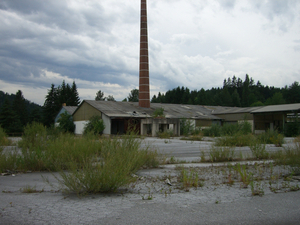
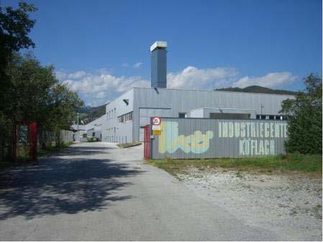
Main objective is the support of the five municipalities in activities to reuse brownfields – former industrial/commercial and mining areas – in a sustainable and environmental friendly way. The principle of circular flow land use management is the central strategy to manage the land potentials.
ACT4PPP – Urban development of the former brewery area “Reininghaus“ in Graz (AT)
Description
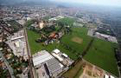
This pilot action referrs to the former brewery of “Reininghaus” located in the western part of the City of Graz. Within 100 ha it represents the biggest area located to the city. Graz-Reininghaus is basically a large greenfield site with various old industrial buildings. Most of the area is accounted for as commercial area but currently being used for agricultural purpose. 55 ha of the area are privately owned. South of this area, there is a former military site called “Hummel Kaserne”, which should be included in the restructuring process.
Objectives
The general objective is to find a convenient PPP model to develop this site to a prospering city district of high quality with urban diversity use just like residential, work, education, cultural and entertainment together with private investors and the City of Graz by keeping public interests. Besides cooperation with other departments of the City of Graz and with the Technical University for Architecture (institute for urban planning) the accompanying of scientific studies and research work for the planning area are also very important objectives.
Activities
Activities which have been done including implementation:
- urban planning framework Graz-Reininghaus – definition and development of an urban framework concerning integrated development and spatial structure of the planning area;
- overall traffic concept for the area including surroundings as integral part of the Urban planning framework Graz-Reininghaus development and linking up the area to public transport, bicycle and footpaths;
- concept for the green space in Graz-Reininghaus, experiencable green routes and green connections by linking up existing and planned green and free space in the surrounding of the urban space;
- citizens participations for ensuring public interests.
Results
Due to the financial and economic crisis since 2008, the former owner of the area, the ASSET ONE AG, was not able to develop the area anymore. The City itself thought about buying the land from the investor, but that plan was rejected later on. Financing possibilities for the infrastructure are investigated by the EIB. At the moment the market interest for this area is very low, because the demand for housing is moderate. A high amount of up-front costs would be necessary to set-up basic infrastructure for the area.
SOL – Save Our Lives – Implementation of Ccmmunicators in Styrian communities (AT)
Description
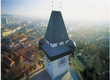
The pilot area of Styria (Steiermark) is a state or Bundesland, located in the southeast of Austria. In Austria it is the second largest of the nine Austrian federal-states, covering 16,401 km². Styria borders on Slovenia in the South, as well as the other Austrian states of Upper Austria, Lower Austria, Salzburg, Burgenlad and Carinthia. The population (as of 1.1.2010) was 1,208,372. Styria is divided into 17 political districts and 542 communities and the capital city is Graz. Because of 57% proportion of forest and grassland (meadows), pastures, fruit gardens and vineyards Styria is also called “The Green heart of Austria”. The south of the country is characterised by a hilly wine growing region. On the other hand Styria is also a part of the Alps and famous for the Ennstal with the highest mountain Dachstein (2995) and the National Park of Gesäuse in the north. Styria has a total of 452,6 km of roads, this is the longest highway and motorway network in Austria. 79 people were killed on Styrian Streets in 2010. This is the lowest number of deaths since measurement.
Objectives
Main objective is to increase the knowledge about the Road Safety Programme (RSP) within the community with the help of an external "communicator". Furthermore, another important objective is to raise awareness in their community concerning the RSP, road safety risk factors, mobility education and road crash and injury prevention in the context of strengthened sustainable mobility.
Activities
- 100 Styrian communities have been visited by one Communicator to motivate mayors and other local stakeholders to implement Road Safety Strategies and measures concerning risk factors (“external” Communicator).
- In 3 regional Workshops, interested people from the communities (target group: mayors, employees of municipalities offices, teachers, members of district council, district police….) get trained to be “local” Communicators (situated in the community) and become aware of Road Safety Strategies and measures concerning risk factors.
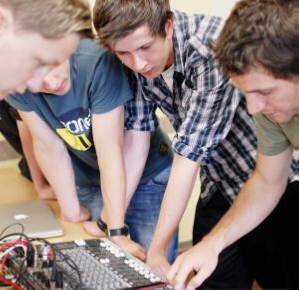
Young teams of communicators (“young” Communicators) will then visit schools to provide accident prevention workshops with a new approach to reach the youth in their language.
Results
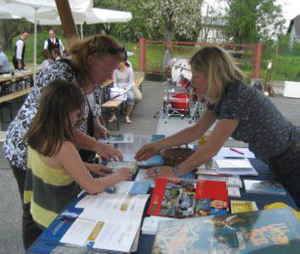
Several Styrian communities where visited by trained young Communicators to motivate the Mayors and the public, to implement measures concerning risk factors and mobility education. The Communicators are recruited, trained and given information materials is prepared for the activities. Appointments will be made for the Communicators with the Mayors. The Communicators will also arrange local events to promote the Styrian Road Safety Programme.
The future success will likely depend on the skills and motivations of the Communicators, and maybe how well they are supported at the centre with global programmes ‘opening the door’ for their local activities. Furthermore, increased mentioning of the programme within wider media campaigns might be useful in supporting the local activities.
Click HERE to download the training documents and other interesting documents from the Styrian Road Safety Programme.
CERREC – Re-use box in Graz (AT)
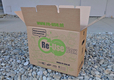
Through several promotional activities people can become motivated to get their own Re-Use Box for free. Filled-in boxes can be returned to one of the several collection points in the City of Graz. The employees of the social enterprise BAN are sorting, repairing and selling all the collected reusable goods in their own re-use shop. With the use of the Re-Use Box as a practical collection system for small reusable items, the protection of resources and as well as the creation of green jobs, are guaranteed.