REGIONAL INFORMATION:
Kärnten / Austria
Area: 9.536 km²
GDP (PPS per inhabitant): 25.000
GDP Index EU 27: 106
Tourism, Agriculture and forestry, Construction industry, Tertiary sector, Mechanical sector, Food-processing industry, Glass industry
www.ktn.gv.at
If you are not yet a member you can register here.
| SoNorA | SOuth-NORth Axis | |
 |
Regional partner(s): |
|
| BATCo | Baltic-Adriatic Transport Cooperation | |
 |
Regional partner(s): |
|
| SALVERE | Semi-natural grassland as a source of biodiversity improvement | |
 |
Regional partner(s): | |
| REZIPE | Renewable Energies for Zero Emission Transport In Europe | |
 |
Regional partner(s): | |
| CoP | Cities on Power | |
 |
Regional partner(s): | |

REZIPE – Promoting clean energy in Cartinthia (AT)
Description
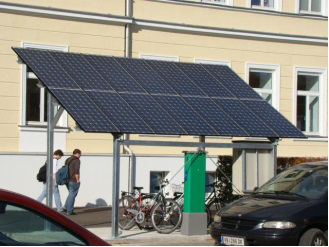
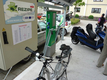
REZIPE investment in Carinthia consisted of installation of 5 e-charging stations and was a part of a larger demonstrative activity of the city showcasing the renewable energy usage in individual mobility.
Within its broader demonstration activitiy the municipality has set up a zero emission public car system in the city area. Five electrical cars were rented and offered as tesing vehicles to the citizens who could experience environmentally friendly technology on their own.
Results
The e-vehicle testing was open to the public between February 2011 and March 2012. More than 230 test drivers drove more than 67.000 kilometres within this period. Five e-charging stations were used to their full potential.
Three charging stations from type Lebensland "Groß" are located in the city centre and two e-charging stations from type Alpina "KEBA" are installed in the close proximity of the educational institutes, so that students and teachers to get in contact with the new environmental technology and to charge their e- vehicles during the lessons.
The installation is benefiting the environment in the city of Klagenfurt in the first run and also reducing emissions of climate gases like carbon dioxide (CO2), nitrogen oxides (NO2x) and fine dust (PM10). Furthermore the citizens have a visual connection to the project and the usage of zero emission vehicles could be boost.