REGIONAL INFORMATION:
Lombardia / Italy
Area: 23.861 km²
GDP (PPS per inhabitant): 33.300
GDP Index EU 27: 135,1
Tertiary sector (mainly ICT, R&D;, etc.), SMEs

If you are not yet a member you can register here.
| CERIM | Central Europe Research to Innovation Models | |
 |
Regional partner(s): |
|
| FLAME | Future Laboratory for the Diffusion and Application of Innovation in Materials Science and Engineering | |
 |
Regional partner(s): | |
| AutoNet | Transnational Network of Leading Automotive Regions in CE | |
 |
Regional partner(s): | |
| CLUSTERS-CORD | Clusters & Cooperation for Regional Development in Central Europe | |
 |
Regional partner(s): |
|
| CNCB | Cluster and Network Cooperation for Business Success in Central Europe | |
 |
Regional partner(s): | |
| InoPlaCe | Improving of Key Supporting Services for Young Innovators across Central Europe | |
 |
Regional partner(s): | |
| NANOFORCE | Nanotechnology for Chemical Enterprises – how to link scientific knowledge to the business in the Central Europe space | |
 |
Regional partner(s): |
|
| CentralCommunity | Emerging communities for collective innovation in Central Europe | |
 |
Regional partner(s): |
|
| SOL – Save Our Lives | SOL – Save Our Lives. A Comprehensive Road Safety Strategy for Central Europe | |
 |
Regional partner(s): |
|

| FOKS | Focus on Key Sources of Environmental Risks | |
 |
Regional partner(s): | |
| URBAN-SMS | Urban Soil Management Strategy | |
 |
Regional partner(s): | |
| EULAKES | European Lakes Under Environmental Stressors (Supporting lake governance to mitigate the impact of climate change) | |
 |
Regional partner(s): |
|
| EnSURE | Energy Savings in Urban Quarters through Rehabilitation and New Ways of Energy Supply | |
 |
Regional partner(s): |
|
| ECOPAPERLOOP | Eco design for the enhancement of central Europe paper based products recycling loop | |
 |
Regional partner(s): |
|
| DANUBENERGY | Improving eco-efficiency of bio-energy production and supply in riparian areas of the Danube river basin and other floodplains in Central Europe – DANUBENERGY | |
 |
Regional partner(s): |
|
| CombinES | Combining energy services with subsidy schemes to finance energy efficiency in Central Europe | |
 |
Regional partner(s): |
|
| LiCEA | Life Cycle based Energy Audit | |
 |
Regional partner(s): |
|

URBAN-SMS – Urban soil management in Milan (IT)
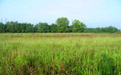
EXPO Area (98.5 ha)
The pilot area has been designed by the Municipality as a location for the upcoming 2015 universal exposition. It is located in the northern part of
Milan, in a highly urbanized area. The land use is agricultural now, and it is planned as an exposition area for agricultural issues (an agro-botanical garden) in 2015; the land use after the end of the exhibition is still unknown.
Situation of the test area
Many people have protested because of the already congested territory (the area is side by side with the new Milano fair) where green land is rapidly disappearing due to the new fair, the ancillary highway links, roads, railways and suburban trains. In the meanwhile the area is no longer cultivated and spontaneous vegetation is growing. An initial environmental survey showed no chemical contamination.
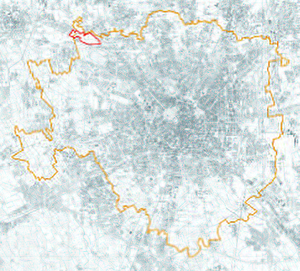
EXPO area location in north-western part of the city
URBAN SMS activities
Samples of agricultural land were collected and chemicophysical analysis performed in order to produce data sets needed by the URBAN SMS software. The evaluation of soil quality with the software tool performed on the area and results were used in dissemination of the project around Italy. The data is necessary to improve consideration of soil in spatial and urban planning on all levels. It supports planners and other stakeholders in the decision
process.
Results and experiences
Urban sprawl in northern areas of the city is very intensive. For this reason it is considered of primary importance to direct urban planning towards soil protection. Application of the Soil Manager Suite produced indicators which describe how to plan the development of the area in order to minimize the impact on soil resource and to optimize its consumption and can be readily introduced in local SEA/EIA procedures. For example, the run of Agricultural Soil Quality localises the most suitable soils for agricultural use. This suggests that the expo-area development should preserve these soils from sealing and from removing, steering towards uses that allow an agricultural reconversion, after the 2015 expo event.
UrbSpace – “5 Municipalities’ park” in Rho (IT)
Description of this pilot project
The project site is a greatly extended green area (600ha) which was not much used but offers high potential use. The implementation of the participation process created a good relationship between local authorities and the local groups. In collaboration with Agenzia InnovA21, an agency for sustainable development, several meetings were organized with the coordination group of local associations to start the participation process. During the planning phase, the common Action plan has been elaborated and shared with local stakeholders, like local associations and local authorities. In this way it was possible to develop a public participation process.
The investments in the 5 Municipalities’ park are dedicated to improve environmental aspect and its public use. Several public meetings were organised to share all the decision about the investments to do.
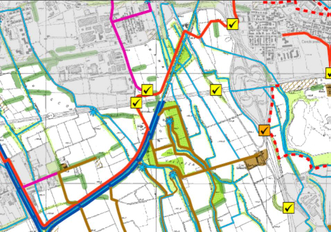
In 2011, following investments were realised:
- Trees planting to improve biodiversity with involvement of citizens and volunteers (app. 2500,00 euro)
- Tools for maintenance for local associations committee, like spades, wheelbarrows…(app. 2.000,00 euro)
- Forestal maintenance (2.500,00 euro)
- Improvement of a public space in the park, with electricity, kitchen facilitation, tables, seats… (5.000,00 euro)
- Road signs, to indicate how to reach the park from the centres of the cities (2.400,00)
- Billboards with the maps and description of the park ( 4.000,00 euro)
- Gazebo (1.000,00 euro)
- Cycle-racks (1.500,00 euro)
Transnational added value
The improvement of the 5 Municipalities’ Park is a good example of improvement of an open urban space near a big city like Milan. The added value is the involvement of the population in all the decisions of the process. So the public participation is the real value of the project, even the decision of the investements. In this way the public institution can be more sure about the right things to do and to buy to improve a public space.
Sustainability of the investment
The investments’ are decided with the involvement of local groups and local authorities representatives. In this way every decision for each investment is shared with the people that directly use and know the park better.
Foreseen impacts and leverage effect
The foreseen impacts will be the improvement of the fruition of the Park and the environmental improvement. With these investement, the local organisations will be able to organise several events to stimulate people to visit the park and to learn to appreciate local green areas around and inside the cities: the urban open spaces. The involvement of local stakeholders like associations and public institutions in the creation of the Action Plan permitted to chose the proper investements.
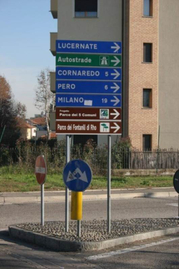
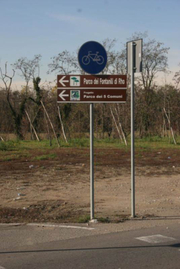
At the same time thanks to the action plan and the investment it is possible to plant new trees and to make some necessary maintenance to the green areas and footpaths. In this way it is important to keep a balance between fruition and biodiversity conservation.