
REGIONAL INFORMATION:
Del-Alfold / Hungary
Area: 18.339 km²
GDP (PPS per inhabitant): 9.900
GDP Index EU 27: 42,1
Agriculture, Automotive industry, Ceramics industry, Clusters / Technology clusters, Construction industry, Eco-Technology development, Food-processing industry, Forestry, Glass industry, ICT sector, Logistic businesses, Machinery, Research and Development, Tertiary sector, Tourism, Winegrowing/vineyards

Bács-Kiskun megye
Békes megye

Csongrád megye
If you are not yet a member you can register here.
| FREE | From Research to Enterprise | |
 |
Regional partner(s): | |
| Re-Turn | Regions benefitting from returning migrants | |
 |
Regional partner(s): | |
| KASSETTS | Knowledge-enabled Access of Central Europe SMEs to Efficient Transnational Transport Solutions | |
 |
Regional partner(s): |
|
| TROLLEY | TROLLEY – Promote Clean Public Transport | |
 |
Regional partner(s): | |
| GOVERNEE | Good Governance in Energy Efficiency | |
 |
Regional partner(s): | |
| SEBE | Sustainable and Innovative European Biogas Environment | |
 |
Regional partner(s): |
|

Traditional and wild – Folklore House in Kunadacs (HU)
Description
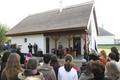
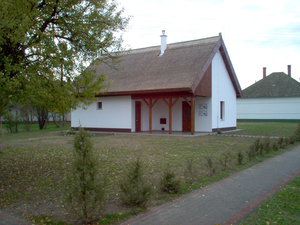
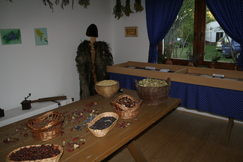
The investment focuses on the presentation of how to deal with plants and plant oriented traditions in nature protected areas. An important aspect is here the surrounding Kiskunság National Park where collection of plants is target of special regulations and resources must be protected even at higher level than in other implementation areas. In these rooms small tools and processing equipments will be installed too, which will be collected in the first 3 periods of the project. The pilot implementation may be a model for further implementation sites in Central Europe. It was be a special building (small folklore house) devoted to preservation and dissemination of written documents and remembrances of cultural traditions of Felső-Kiskunság region (where Kunadacs is located). It suits to the surrounding atmosphere and old style of the region. It included 2 premises (exhibition and training rooms). In the first room plants of Kiskunság region are presented in pictures and posters with descriptions. The other room devote to the utilisation of collected plants and their processed products which reflect the traditions of the site. They were presented both in form of pictures and as real exhibition subjects. Both premises are suitable for presenting the knowledge and practical technics to the visitors.
Activities
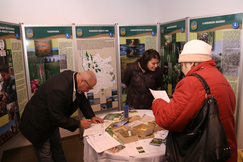
The folklorehouse and herb exhibition room was built in the middle of Kunadacs village. The constructing works stared on 18th May and finished on 3rd September. Meanwhile Village Local Authority of Kunadacs requested local people to offer several old used and forgotten equipments for a local exhibiton. PP3 got a lot of help and helping hand from Corvinus University so we could show a very colourful wild plant collection to locals and other visitors. This building is just the first step of a long term process. In future plans PP3 would like to present a sustainable model of wild plant collecting for other Hungarian villages.
Results
The folklore house is going to serve as demonstration place for visitors and promotion of traditional plant collection activities in future. The exhibition rooms will be allowed to be visited free of charge. Its life-span is at least 15 years after the project. It is going to assure an attractive home for local and regional events connected with culture, education, social programs and nature.
TROLLEY – Comprehensive construction work for the integrated transport corridor in Szeged (HU)

Description
Szeged Transport Company (SZKT) participates in the TROLLEY project with a pilot action to demonstrate key elements of a Trolleybus Intermodal Corridor that aims high for a better, intermodal transportation system in Szeged. These pilot elements are the high-speed wires, crossings and switches which ensure a reduced number of trolley derailments as well as reduced vibrations in the neighbouring houses. Furthermore, SZKT reconstructs a trolleybus stop with introducing special kerb elements to provide accessibility to low-floor trolleybuses in an urban environment. Project investment elements are:
- Reconstruction of the overhead wires at Híd utca – Vár utca trolleybus / tram junction
- Reconstruction of the Híd utca trolleybus stop.
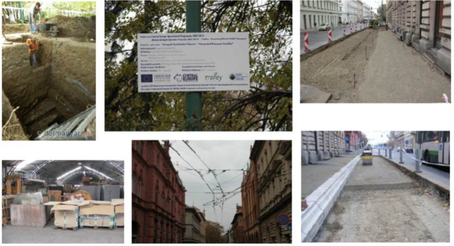
The exemplary reconstruction of the trolleybus/tram junction Híd utca will demonstrate a concrete handling of how tram and trolleybus systems do not only coexist, but can even benefit from each other. The building of the high-speed crossings and switches was finalized with a 4 month delay due to archeological found and problems with ownership permissions along the construction site. One of the masts could not be built as planned since its base would interfere with the ancient wall of the Szeged fortress. The consequential redesign of the wire planning was done and on 26th November 2011 the wire reconstruction at Híd utca – Vár utca trolleybus loop started, and was finished in mid-February 2012. For the trolleybus stop two procurement procedures were needed (second was successful) and on 19th October 2011 the work on the reconstruction of the Híd utca trolleybus stop started. On 30th November 2011 the reconstruction of the stop was finished. For the investment expenditures an on-the-spot FLC check has been carried out successfully.
Objectives
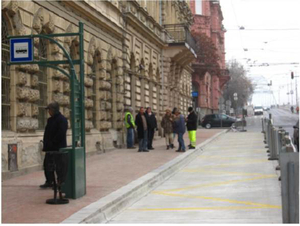
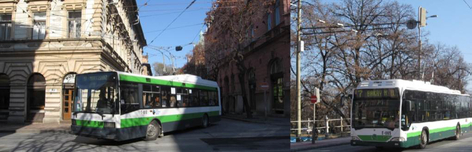
With the reconstructed trolleybus stop our aim was to introduced elevated platform levels at trolleybus stops in order to achieve barrier-free access for low-floor trolleybuses. These required the production of special concrete kerb elements. The road surface was built also from concrete locally in order to achieve long lifetime, while the pavement was covered by brick surface with imprints for the blinds. The main quantities: rebuilding of 170 m2 road surface, 66.7 m of different kerb elements, 182.5 m2 pavement surface. By a future design of a trolleybus corridor such elevated platforms are expected to be planned. The aim of the reconstruction of the overhead wires was to increase the speed of the trolleybuses even in such complicated layouts. High-speed overhead elements allow to increase the speed from 10-15 km/h to 40-50 km/h while significantly decrease the number of accidents caused by the derailments of the current collectors. These overhead elements were delivered by Elektroline a.s. from the Czech Republic. The main quantities of the reconstruction: 997 m of new trolleybus overhead was built, 4 new masts were erected, 2 crossings, 9 turnouts (4 of them remote controlled) was built in. In case of a future trolleybus corridor design high-speed overhead elements are expected to be planned.
Activities
SZKT started the investment-related work in TROLLEY with a delay of six months (August 2010 instead February 2010), as the Subsidy Contract and PA have been signed behind schedule, but these documents were mandatory for the official start of the investment-related work by SZKT. After starting the investment-related project work on the reconstruction of the overhead wires at Híd utca – Vár utca trolleybus loop, the work were again delayed, as the Cultural Heritage Authority in its first preliminary permission ordered an archaeological survey done by the Móra Ferenc Museum. The Museum declared that the mast 9046A cannot be built since its base would interfere with the ancient wall of the Szeged fortress. That’s why a redesign was made, avoiding this mast, and an auxiliary mast (9046a) was planned in cooperation with the Museum. This new auxiliary mast’s foundation was dug in July 2011 by the Museum, but it turned out that the wall of the fortress is also interfered in its foundation by the new mast. That’s why SZKT needs to redesign once more the masts plans, but and on 26th November the wire reconstruction at Híd utca – Vár utca trolleybus loop started. Furthermore, some hooks of the overhead wires are in the outer walls of several buildings. One of these buildings (Roosevelt tér 6.) although has majority ownership of the Hungarian state, who gave permission (which was enough for the National Transport Authority to give its building permission), the Cultural Heritage Authority ordered, that the collectively of the owners must gave permission for new hooks (although already 13 hooks are in this building). The buildings collective called for an assembly and the majority decided to issue their permission.
The reconstruction of the Híd utca trolleybus stop started on 19th October and ended on 30th November 2011 (see figure 2). The work on the “electronic terminal” at the Híd utca trolleybus stop will be realised from an external financial source in 2012, as part of another project. The realisation of the investment as a whole – reconstruction of the overhead wires at Híd utca – Vár utca trolleybus loop and the reconstruction of the Híd utca trolleybus stop was ready by February 2012 within the project runtime of TROLLEY.
Transnational Added Value
With the realisation of the investment of Szeged “Intermodal Corridor Pilot Action” in the framework of the Central Europe project TROLLEY SZKT will show in practice overhead elements that are capable of providing a safe contact between the trolley and the wires at high speed and complicated configurations (switches, crossings). These elements will decrease the number of derailments of the trolleys as well as reduce the vibration to the walls of the neighbouring houses. As it is not an easy job to do the urban planning of a wire system to provide track to the clean, low-noise, low-vibration electric buses, SZKT published a report providing a step by step guide and a case study of possible problems and their solutions. The results will also be published in the transnational Trolleybus Intermodality Compendium. This compendium is a core output of the TROLLEY project and can be directly used by practitioners. Furthermore, SZKT reconstructs a trolleybus stop in order to provide accessibility to low-floor trolleybuses. The aim of the pilot is to show the local and international community a best practice for trolleybus stops and to enhance the accessibility due to the special kerb elements by using the kneeling capability of the trolleybuses. Thereby, SZKT will demonstrate that a trolleybus stop can be made emphatic while it matches the urban environment. The shown new design elements could be used further in other European construction projects to promote clean electric public transport in cities. They will be able to take up the expertise and scale it up. At the final conference of TROLLEY, which will took place in Szeged and that was open to a wide transnational audience, the investment was presented also to interested actors all over Central Europe.
Sustainablity of investment
Both investments are made at a key junction of Szeged city’s trolleybus/ tram network existing since 1979, which ensures long term sustainability. The city’s long-term trafficdevelopment concept (released in 2007 accepted by the local government) aims to make a “green inner city” (aim LXI.), where the preferred mode of traffic is zero-emission, electric public transport (trams, trolleybuses) as well as pedestrians, cyclists. Therefore, SZKT will promote the intermodal trolleybus-tram connection corridor even after the end of the project and the corridor might be even advanced, as it is planned to install a bike hire station as well as a bicycle parking station and to connect the interchange with demand responsive connecting services in Szeged.
Impact & leverage effect
The investment in Szeged focuses on speeding up trolleybuses, on smooth technical crossings of trolleybuses and trams, on quick passenger transfer as well as on innovative passenger information technology, which will lead to an improved local interconnection to foster the use of public transport in Szeged. The expected impact will include the exclusion of polluting vehicles from the city centre or forming a regional transit union (local trolleybus and regional interconnection). This investment was recognized by the local stakeholders (mayor, local members of the city assembly) as well as it is used by 5870 daily passengers (data from the 2012 counting). A commemorating plaque was placed in this stop for this investment. In Hungary, Budapest, Debrecen are further important trolleybus and tram cities. They will directly benefit from the experiences gained in TROLLEY regarding integration of trolleybus and tram.
Re-Turn – One-stop shop for returning migrants in central Transdanubia Region (HU)

Description
The Case Study Region “Central Transdanubia” consists of 3 counties (Fejér,
Veszprém and Komárom-Esztergom) in the west-central area of Hungary. Its
biggest city is Székesfehérvár with 100.000 inhabitants. Central Transdanubia has very favourable geographical location and geopolitical position in Hungary. By GDP per capita indicator the Region is the country’s 2nd most advanced area with 10% contribution rate to the national GDP. Industry has a determinant role in the GDP production of Central Transdanubia. Analyzing the population by age group it seems that in Central Transdanubia the ratio of active-aged population perfectly matched with the national average. The nearly 60 per cent ratio of the 18-59 year age group is counterbalanced by the opposite trend of the age groups of 0-17 and of above 60. Hungary – and even the region – due to their geographical location play an important role in the continent’s migration process. As a transit and target country it is crossed by several migration routes towards the EU.
Objective
The purpose of the One-stop-shop to re-integrate migrants to the benefit of the regional economy, providing full information about reintegration services, helping them find a proper job and utilize their knowledge acquired abroad.
Activities
The Hungarian project partner, Mid-Pannon Regional Development Company developed a handbook for the one-stop shop administration, covering all the steps and important procedures during the reintegration. The handbook contains the existing and available services in the field of taxation, employment, entrepreneurship, trainings etc.
Results
From November 2012, returning migrants in Central Transdanubia region can find fast and efficient services and administration in one place. The one-stop shop is located in the Türr István Training and Research Institute, Székesfehérvár. 5 trained employees (all qualified and experienced labour market consultants) offer face-to-face contact and provide information and support with accessing all of the local remingrant services. The information is also available via the telephone hotline (toll-free number from Hungary: 06-80-205-385). The one-shop shop is open on weekdays, between 8:00 – 16:00.The One-stop-shop is based on board cooperation between local actors, institutions and economic development bodies. It is offering flexible and free services for the returnees. Following services are available in the One-stop shop:
- Telephone hotline
- Personal consultancy and assistance in reintegration (help in administrative procedures, housing, childcare etc.)
- Business advice and information
- Employment possibil ities
- Trainings and HR development
- Search for business partners and financing possibilities