
REGIONAL INFORMATION:
Piemonte / Italy
Area: 25.402 km²
GDP (PPS per inhabitant): 28.366
GDP Index EU 27: 114,0
Agriculture, Crafts, Building sector, ICT sector, Automotive, aerospace and mechanical industry, Tourism
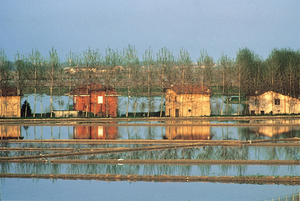
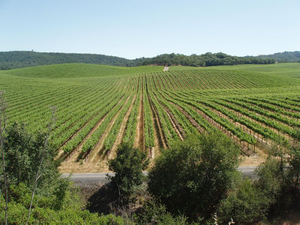
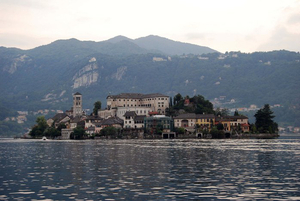
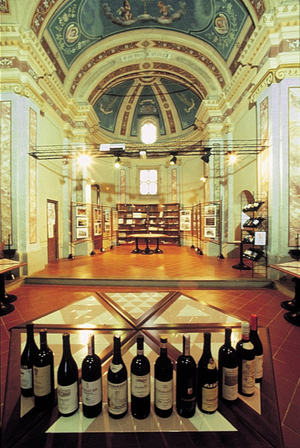
www.regione.piemonte.it/piemonte_gallery/pagine_ita/galleria/pag_01.htm

If you are not yet a member you can register here.
| IDEA | Innovative Development of European Areas by Fostering Transnational Knowledge Development | |
 |
Regional partner(s): | |
| ClusterCOOP | Enhancing Framework Conditions for an effective Transnational Cluster Cooperation in Central European | |
 |
Regional partner(s): | |
| CentraLab | Central European Living Lab for Territorial Innovation | |
 |
Regional partner(s): | |
| PLASTiCE | Innovative value chain development for sustainable plastics in Central Europe | |
 |
Regional partner(s): | |
| Re-Turn | Regions benefitting from returning migrants | |
 |
Regional partner(s): | |

| ChemLog | Chemical Logistics Cooperation in Central and Eastern Europe | |
 |
Regional partner(s): | |
| SoNorA | SOuth-NORth Axis | |
 |
Regional partner(s): |
|

| RUBIRES | Rural Biological Resources | |
 |
Regional partner(s): | |
| URBAN-SMS | Urban Soil Management Strategy | |
 |
Regional partner(s): |
|
| INARMA | Integrated Approach to Flood Risk Management | |
 |
Regional partner(s): |
|
| SEBE | Sustainable and Innovative European Biogas Environment | |
 |
Regional partner(s): | |
| TAB | Take a Breath! – Adaptation Actions to reduce adverse health impacts of air pollution | |
 |
Regional partner(s): |
|
| CoP | Cities on Power | |
 |
Regional partner(s): |
|
| CERREC | Central Europe Repair & Re-use Centres and Networks | |
 |
Regional partner(s): | |
| CEP-REC | Introduction of Regional Energy Concepts | |
 |
Regional partner(s): |
|
| E2BEBIS | Environmental and Economic BEnefits from BIochar clusterS in the Central area | |
 |
Regional partner(s): |
|
| CROSSCULTOUR | Cross Marketing Strategies for Culture and Tourism for more Attractiveness and Competitiveness for Cities and Regions | |
 |
Regional partner(s): | |
| LISTEN TO THE VOICE OF VILLAGES | Local Initiative STrENgthening: how to build up a new TOurism in THE Valleys and among the mOst vItal CEntres OF rural VILLAGES | |
 |
Regional partner(s): | |
| ACT4PPP | Transnational Action for Public Private Partnership | |
 |
Regional partner(s): | |
| UrbSpace | Urban spaces – enhancing the attractiveness and quality of the urban environment | |
 |
Regional partner(s): | |
| CIRCUSE | Circular flow land use management | |
 |
Regional partner(s): |
|
| YURA | Developing transnational transversal youth strategies in regions with migration | |
 |
Regional partner(s): | |
| EURUFU | European Rural Futures – New opportunities to secure the provision of public sevices in rural cities and municipalities | |
 |
Regional partner(s): | |
| CCC | Cultural Capital Counts | |
 |
Regional partner(s): | |
| ADAPT2DC | New innovative solutions to adapt governance and management of public infrastructure and services to demographic change in shrinking regions and cities of CE | |
 |
Regional partner(s): |
|
| THETRIS | THEmatic Transnational church Route development with the Involvement of local Society | |
 |
Regional partner(s): |
|
| CENTRAL MARKETS | Revitalising and promoting traditional markets in central Europe | |
 |
Regional partner(s): |
|
| CITY REGIONS | Increasing the competitiveness of city regions through integrated urban-rural development | |
 |
Regional partner(s): |
|
ACT4PPP – Installation of a photovoltaic plant on a landfill site in Asti (IT)

Description
Casale Monferrato is a town in the province of Alessandria in the south-east of Piedmont, Italy. It has over 36,000 residents. For many years the City of Casale has been associated with the factory of the multinational company “Eternit”. This company produced asbestos-cement products. In order to undertake eco-friendly development policies and also to reassure the people, the area around Casale seems to be particularly suitable for the production of electricity from renewable sources.
The pilot action originates from the attempt to create a new and positive image of a sustainable and liveable environment for the Municipality of Casale Monferrato. Moreover, it should express the will and the need to bring new support to the citizens affected directly or indirectly by the exposure to asbestos. Furthermore, the project also responds to the regional, national and European guidelines in terms of environmental sustainability and energy efficiency.
A public municipal company, COSMO plc., has been chosen to implement the project, because this company owns big areas, which are essential for the installation of PV plants. It owns a biogas plant and has been carrying out many measures of integrated waste disposal. COSMO was planning to build photovoltaic plants on exhausted dumps. During the post-operational phase of a landfill site, the area normally remains unused for 20-25 years. The advantages of such a project are:
- Production of a great amount of clean energy, avoiding the exploitation of non-renewable resources
- Transformation of damaged sites by increasing their value from an environmental point of view
- Productive sites would not be occupied
The activities which Lamoro has already carried out include:
- Environmental and territorial analysis of the areas
- Inspection of the areas
- Preliminary analysis of energy needs
- Evaluation of the different technologies to be used for the implementation of the plants
- Preliminary cost-benefit analysis
- Socio-economic impact study
- Preliminary investigations of possible forms of financing
After geological surveys and loading tests carried out in the selected soils, the dimensioning of photovoltaic plants has been started. The next steps which the LAMORO agency will take for the project will be the elaboration of a model partner for the PPP who is able to realise and manage the project and shows a specific role, competence and responsibility.
Objectives
The main objectives for the pilot action within ACT4PPP are:
- To find an appropriate and practicable form of partnership with the private sector to be able to finance and realise the project
- Develop a repeatable type of project for the whole region
- To give a better visibility to the new positive image of the region of Casale
Also other Municipalities of Casale Monferrato basin are well interested in the project implementation, seeing the chance to reduce energy costs, to cut air pollution and CO2 emissions and to make the former asbestos area cleaner.
Actions
The main challenge of the project is primarily to give a new positive image
to the town of Casale Monferrato, which had linked its name unfortunately
for years inextricably to the establishment of the multinational “Eternit”
specialised in the production of asbestos cement for construction.
On the basis of the geological survey, further steps are:
- The technical planning and the estimation of the size of the plant
- Determination of the most suitable type of management for COSMO
- SWOT analysis in order to develop the PPP model
- Research and analysis of various funding opportunities
- Development and implementation of a communication strategy
- Implementation of the best solution
Results
After a previous feasibility study, the analysis has been expanded by a geological survey and this has allowed understanding of specific soil characteristics. As a result of soil analysis, the baseline analysis was completed. The estimated soil support capability was lower than anticipated on both sites leading to a reduction of the power plants in size; 50 and 250kW. For the partnership a contractual model between COSMO as the public body and a private company has been foreseen. The contract will include a lease agreement that will allow the private to build and maintain the power production plant on an area of someone else’s ownership. The private partner will be also responsible for the operation of the plant. The private entity will receive a payment for the feed-in of energy. Back in 2007 the Italian Ministry for Industry passed a law for a new FiT for PV installations that guarantees a feed-in tariff for installations larger than 1kW. This gives the owner the current PV rate.
According to the new Conto Energia III, Italy will begin reducing its funding for solar electricity in three phases starting from 2011. The cuts come in line with the current market conditions, which are forcing countries all over Europe to follow suit. Under the new legislation, feed-in tariffs for solar electricity generated by open-space systems with a capacity up to 5MW are to be cut by 9.3% on average during the first four months of 2011, while incentives for solar projects with a capacity of 5MW and more will be decreased by 14.2%. All tariffs are then to be decreased every four months during 2011.
COSMO company would find a private investor that could be able to finance and realise the photovoltaic plant on exhausted dumps. The private body will pay a rent to COSMO for 20 years on a basis of feed-in-tariff and the payment is bi-monthly and on account. The owner will be the soil holder, while the building will be of private ownership (in fact, in this case, the surface and the buildings have 2 different owners). The concessionaire chooses suitable areas to build a plant, designs energy production projects coming from renewable energy and has the ownership of the photovoltaic plant. On the other hand, the franchiser allows the building of the photovoltaic plant through a building lease concession, offering its facilities.
At the moment, the project has to face some restrictions due to the proper choice of the most suitable type of management model. The risks are mainly related to the uncertainties concerning choosing the right partner and finding the best way of financing, because PPPs involve huge initial investments up against future and uncertain cash flows. For this reason, the lack of real guarantees requires a more risky investment and generates problems in the presence of an imperfect capital market. The procurement model that COSMO is choosing is the open one, but currently COSMO has not prepared the procedure yet.
SEBE – Technology pre-treatment optimization for high-biogas production
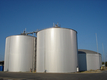
Pre-treatment operation in fact promote the processes of hydrolysis, the removal of lignin and hemicellulose with increase of the porosity of the material and the reduction of the crystallinity of cellulose. Accordingly are released simple sugars such as glucose and fructose easily fermentable in the process of anaerobic digestion for the production of biogas.
By taking into account the main criteria for selection of biomass (territorial availability, economical and seasonal sustainability, high potential fermentability), two different types of biomass have been identified and have been tested for the purposes of the project:
- Domestic residues like fruits and vegetables from the unsold stocks from local supermarkets, residues from canteens)
- Wheat straw coming from a farm located in Piedmont Region
ACTIVITIES
The pilot action started with some Laboratory tests focused on chemical and enzymatic pre-treatment of some different kinds of biomass: energy crops, humid and dry grape marc ( after grape production). All these substrates were characterized by chemical analysis and after this treated with some chemical reagents in particular condition of operation and besides this with some different kind of biological enzymes. After this all these pre-treated biomasses were analyzed in order to obtain the improvement in terms of free sugars presents and available for future fermentations.
As highlighted by the physico-chemical characterization carried out, the selected biomass, have a high content of insoluble fibers, in particular of lignin, that disrupt the processes of anaerobic fermentation, avoiding access to the cellulose and hemicellulose and their degradation by enzymes.In particular the first part of experimental work has provided for the realization of pre-treatment tests on laboratory scale, in order to evaluate the possible problems present and validate the protocol suggested according to the yields obtained.
In the light of literature data have been carried out tests of chemical hydrolysis, both acid and basic, and tests of enzymatic hydrolysis using the enzymes identified in the first months of activity, drawing up appropriate protocols for carrying out pretreatments on the selected biomass. The performace of pre-treatments carried out were evaluated in terms of release of simple sugars (glucose) in the substrates. The preliminary results have provided information on the yields of glucose obtained and allowed to assume some subsequent test protocols. In particular, it was decided to test the combination of types of different pre-treatment in order to maximize the yields in terms of simple sugars obtainable. Therefore, were carried out some other laboratory tests with chemical (both acid and basic) pre-treatments in combination with enzymatic pretreatment characterized by the use of two types of enzymes able to destroy different substrates.
These activities performed on laboratory scale have made it possible to evaluate the process and to define in detail the operational parameters required to make the future tests laid down on at pilot scale.
RESULTS
PRE-TREATMENT OF STRAW
- Higher concentration (1N vs 0.5N) of sulfuric acid in the chemical treatment improve the mobilization of xylose and glucose in the hydrolisates
- Feeding the mixture of enzymes separately increases the mobilization of glucose and xylose but it increases the duration of treatment
- Total Degradation of lignin, cellulose and hemicellulose occurs in the solid part after the steam explosion pretreatment
- Very low concentration of xylose in the final hydrolysate has been measured
- Higher concentration of glucose are achieved with the highest concentrations of the different enzymes (0.1 kg/kg of dry biomass)
- Higher concentrations of glucose are achieved working at pH=4.5 in the enzymatic hydrolysis with the tested cocktail of enzymes
The maximum yield of glucose and xylose has been estimated around 71% of the maximum theoretical value derived from the initial characterization and has been achieved in the CE2 test, combining chemical pretreatment and subsequent enzymatic hydrolysis.
PRE-TREATMENT OF ORGANIC WASTES
Chemical treatments
• Acid reagents seem to be more effective in sugars extractions respect to base in comparable process conditions
• Treatments with sulphuric acids are more effective than these with chloride acid
• Test with sulphuric acid 0,5 N are more efficient than those with acid 1 N
• Test at higher temperature (121°C) are more valuable than those at 50 °C
Enzymatic treatments
• Higher values in Glucose extraction from organic wastes (about 18 g/l) were obtained with the combination of acid treatment with chloride acid 0,5 N at 121°c in combination with pectinase enzymatic treatment (50 gr of enzyme/kg of raw biomass, pH=4.0-T=50 °C)
• Pectinase enzymes seems more proficient in sugar extraction than the combination of cellulase and cellobiase for these kind of substrates: given the substrates composition with a lower content of cellulose and hemicellulose than straw
• At the same condition of enzymes type and concentration and process time and temperature the results obtainable form enzymatic treatments are strongly related to the preliminary chemical treatments
• After 24 h of treatment, the activity of the enzyme does not seem to express anymore: this could be due to some fermentative degradation phenomena occurring despite the antibiotic addition since that the dosage may be insufficient or its spectrum is not quite broad
• Pectinase enzymes treatment without chemical pre-treatment could reach the same results in terms of sugars extraction but with longer residence time (70h instead of 24h)
CERREC – CIT MA BON raising awareness on the topic of door to door collection of used goods
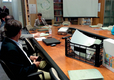
It is about the small and medium objects that because of their mixed material composition, would end up in the mixed good collection but which could become a resource if they were re-used. The pilot activity set to implement virtuous and replicable activities for the diffusion and promotion of the of re-use culture and their integration in the management system of used material flows.
CEP-REC – Results of energy analysis in Provincia di Torino (IT)

The economic structure of the province is very diverse, ranging from manufacturing (automotive, engineering and aerospace) to service industries, with the majority of employees. Tourism increased dramatically following the 2006 Olympic Games and the trend has continued since then.
The main measures developed by the Province of Turin to meet the 2020 targets, in the framework of a Sustainable Energy Action Plan, were: the implementation of the Energy Observatory, which publishes data related to the energy demand and supply of the region; the support given to municipalities as local coordinator of the “Covenant of Mayors” program; the promotion of energy-efficient renovation of public buildings through the use of innovative Energy Performance Contracts.
Solar, biomass and wood have highest potentials
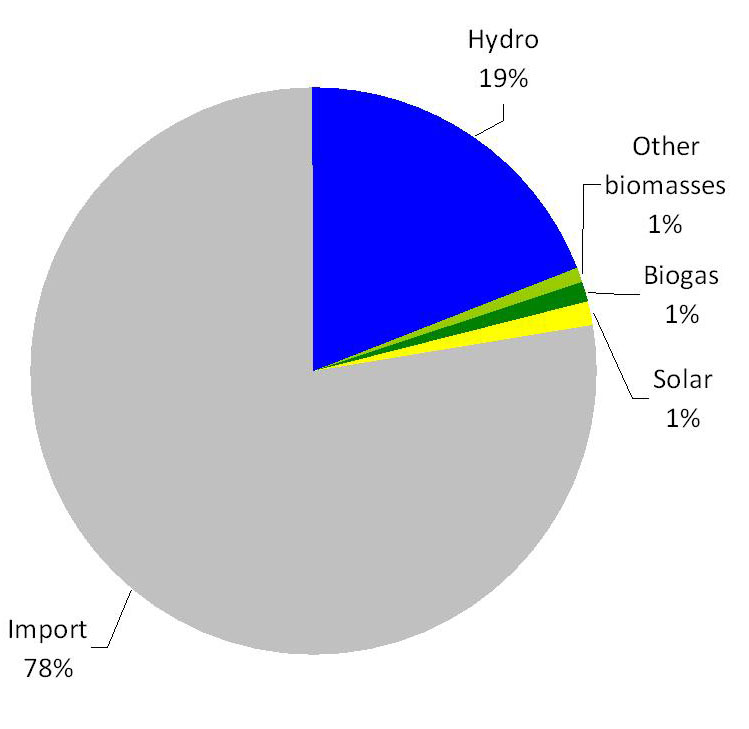
Electricity production by renewable energies
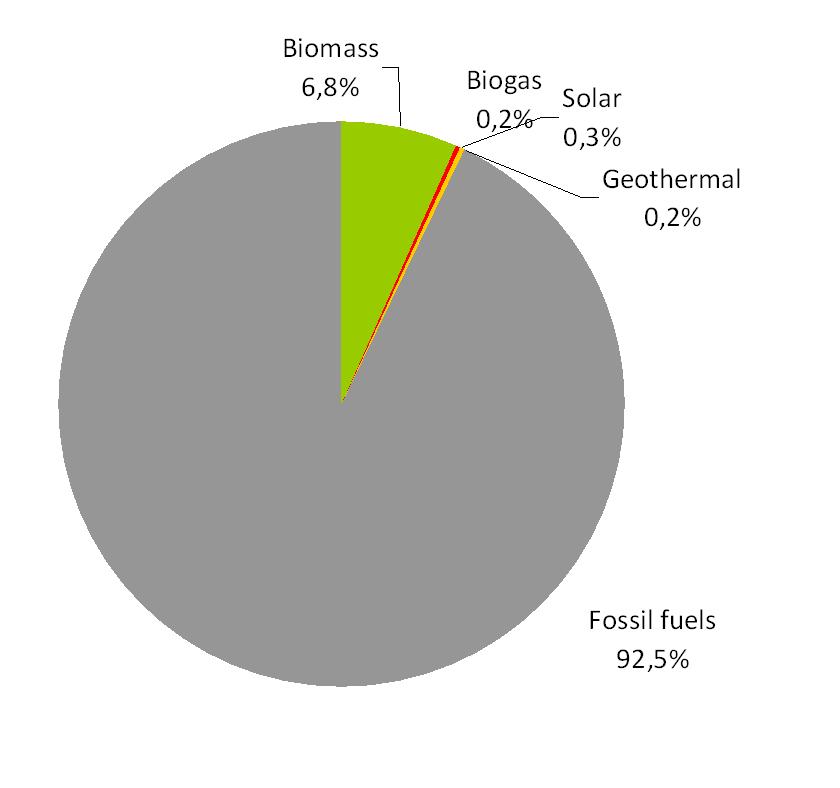
Heat production by renwable energies
In 2011 the final energy demand of the region was about 50 TWh. Natural Gas was the most important resource with more than 41 %, followed by oil products 28 %, while renewable energy sources (for electricity and heating) amount to more than 10 %.
The share of renewables in electricity production is 22 %, with expected further development for solar and biomass energy. Hydro power is almost overexploited and wind has very low potential.
The main source of renewable energy covering heat demand is wood, mostly in the form of logs and pellets for private households. Solar thermal and near surface geothermal energy have good potential, but the priority is the promotion of energy efficiency and energy savings.
Contact:
PROVINCIA DI TORINO | www.provincia.torino.it
ENVIRONMENT PARK | www.envipark.com
ADAPT2DC – Realization of a multi-service center in Ostana (IT)
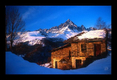
In particular the centre is organized as a meeting point joining together different services dedicated to residents and visitors. It will also offer the possibility to buy regional products, and offer complementary information and tools, working also as a communication and meeting point for people from different generations.
The centre is set to include the following services:
• A premise for local associations
• A library, an indispensable need for a growing young population. The library will be the premise also for the rising Widespread Library on Alpine Culture
• The presentation and sale of local agri-food products and the general promotion of the valley
• The coordination of a “widespread hotel”, connecting the main B&Bs of the area
• An internet point
• The coordination of a car sharing service in collaboration with the other upper Po municipalities and environmental associations in order to promote a sustainable accessibility to the mountain area
• The information point of the “Alpine Convention”
Besides these first already implemented services, other ones are being prepared:
• The sale of counter medications, that from 2006 in Italy can be sold in shops with a simplified regulation than Pharmacies, the so-called Para-Pharmacies;
• The family doctor will receive weekly in the centre and the same centre can coordinate the requests and collect the medical recipes
• A pick-up service for drugs and medications, in particular for elderly people
• A small kindergarten meeting room/playroom could be dedicated to this service, which is missing today
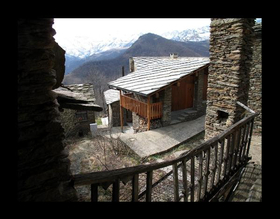
The following steps were part of the pilot action: designation of an appropriate building, finding a responsible manager for the centre, renovation of the building, agreement with local agricultural producers for providing fresh fruit and vegetables, opening of the centre, communication campaign and promotion of the new services. All of this was done in close cooperation with the local municipality (for the renovation works, external funding was available).
The centre is seen as a pilot because none of the other municipalities of the area have a similar centre that merges different public and private functions. In the first months of experience, users were not only the local inhabitants but also many tourists that came to Ostana for vacation.