
REGIONAL INFORMATION:
Severozapad / Czech Republic
Area: 8.649 km²
GDP (PPS per inhabitant): 14.400
GDP Index EU 27: 61,1
Mining, Chemical industry, Energy industries, Engineering, Agricultural big production
http://cestovani.kr-karlovarsky.cz/en/pronavstevniky/Fotogalerie/Pages/default.aspx
http://cestovani.kr-karlovarsky.cz/en/pronavstevniky/Pages/Virtualniprohlidkakraje.aspx
Official Website:www.kr-karlovarsky.cz/kraj_cz

Ústí region

Karlovy Vary region
If you are not yet a member you can register here.
| FREE | From Research to Enterprise | |
 |
Regional partner(s): |
|
| CLUSTERS-CORD | Clusters & Cooperation for Regional Development in Central Europe | |
 |
Regional partner(s): |
|
| IDEA | Innovative Development of European Areas by Fostering Transnational Knowledge Development | |
 |
Regional partner(s): | |
| Re-Turn | Regions benefitting from returning migrants | |
 |
Regional partner(s): | |
| CluStrat | Boosting innovation through new cluster concepts in support of emerging issues and cross-sectoral themes | |
 |
Regional partner(s): |
|
| ChemLog | Chemical Logistics Cooperation in Central and Eastern Europe | |
 |
Regional partner(s): | |
| SoNorA | SOuth-NORth Axis | |
 |
Regional partner(s): | |
| CHAMPIONS | Improvement of CE regions’ accessibility through air transport interconnectivity | |
 |
Regional partner(s): |
|
| GUTS | Green Urban Transport Systems | |
 |
Regional partner(s): | |
| LOGICAL | Transnational LOGistics’ Improvement through Cloud computing and innovAtive cooperative business modeLs | |
 |
Regional partner(s): | |
| INWAPO | Upgrading of Inland Waterway and Sea Ports | |
 |
Regional partner(s): |
|
| ChemLog-T&T; | Tracking and Tracing solutions for improvement of intermodal transport of dangerous goods in CEE | |
 |
Regional partner(s): |
|
| TransEcoNet | Transnational Ecological Networks in Central Europe | |
 |
Regional partner(s): | |
| LABEL | Adaptation to flood risk in the LABE-ELbe river basin | |
 |
Regional partner(s): | |

| COBRAMAN | Manager Coordinating Brownfield Redevelopment Activities | |
 |
Regional partner(s): | |
| LISTEN TO THE VOICE OF VILLAGES | Local Initiative STrENgthening: how to build up a new TOurism in THE Valleys and among the mOst vItal CEntres OF rural VILLAGES | |
 |
Regional partner(s): | |
| ReSOURCE | Utilisation of post-mining potentials for sustainable re-development in Central European mining cities and regions | |
 |
Regional partner(s): | |
| CIRCUSE | Circular flow land use management | |
 |
Regional partner(s): | |
| YURA | Developing transnational transversal youth strategies in regions with migration | |
 |
Regional partner(s): | |
| ReNewTown | New post-socialist city: Competitive and Attractive | |
 |
Regional partner(s): |
|
| EURUFU | European Rural Futures – New opportunities to secure the provision of public sevices in rural cities and municipalities | |
 |
Regional partner(s): | |
| ADAPT2DC | New innovative solutions to adapt governance and management of public infrastructure and services to demographic change in shrinking regions and cities of CE | |
 |
Regional partner(s): |
|
| THETRIS | THEmatic Transnational church Route development with the Involvement of local Society | |
 |
Regional partner(s): |
|
| CENTRAL MARKETS | Revitalising and promoting traditional markets in central Europe | |
 |
Regional partner(s): |
|
YURA – Future Laboratory
Abstract:
The aims of Future Laboratory are:
- to provide and verify methods and tools for defining schemes and strategies to improve living condition in rural areas and regions affected by migration
- to provide a platform that will by initiation and verification of these methods contribute to improve the quality of working and family life and will thus lead to a decrease in migration from the given region
This pilot action is focused on involvement of young people into decision making processes. The main aim is to find out why they would or would not stay in their region. As a result the local and regional politicians could use this information from youngsters.
The idea of Future Laboratory is to involve important and successful people from the region to tell the youngsters their life story and the reasons why they have stayed in the region. There will be held workshops with discussions and the possibility for youngsters to work in groups and specify their claims and needs.
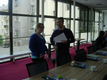
On the kick-off workshop a delegate of the secondary school from Podbořany, which will take part in Future Laboratory in Ústí region, introduced the school and their activities.
LISTEN TO THE VOICE OF VILLAGES – Traces of mines in Ústí Region (CZ)
DESCRIPTION
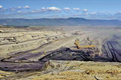
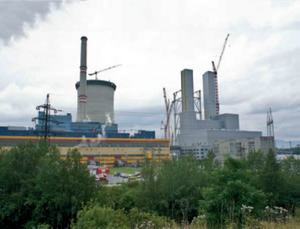
The Ústí Region is situated in the northwest of the Czech Republic on the border to german Saxony. The northern part of the region is dominated by the Ore Mountains while the most important tourism area, the central part of the region, is an industrial landscape with open brown coal pits and dumps, power plants, and industrial and chemical industry.
Traces of Mines is a touristic product which takes the visitor into the areas affected by mining activities in the past, whereas coal is still extracted and energy produced in some of them. Two study routes are targeted towards educational and experience tourism. Excursions and visits show the visitor the mining history and the current status of the area as well as the realized processes of reclamation, recultivation and revitalisation. The study paths cross 32 municipalities where the places of interest are depicted with the area’s mining activity and natural heritage taken in mind. The visitor may choose to cover the entire trail or to visit only the part that interests him.
ACTIVITIES
1.) Research and analysis
The collection of data, based on the questionnaires disseminated among the regional cooperating stakeholders, was completed at the end of 2009. The results of the research are collected in the joint project brochure „Mapping the Territories and Analysis of Governance Tools“.
2.) Declaration on cooperation
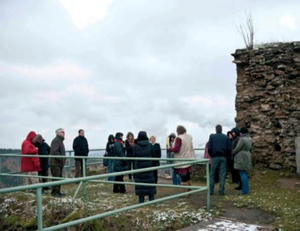
The Declaration on cooperation was signed in 2009 between the project itself and the mining company in Chomutov and its Governor. Based on this cooperation, the project ideas and targets were presented at many regional events, conferences and workshops organised in cooperation with Saxony Anhalt and Ústí Region at the OPEN Days Event 2010 in Brussels.
3.) The Local Guide Group (LGG) meetings
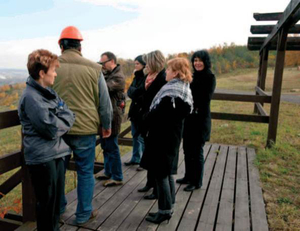
Regular meeting and visits of the pilot are were organised together with participation of all involved subject representatives. More than 25 meeting were organised during the project duration.
4.) Training courses
3 training courses were held with a high participation of staff in cooperation with info centres and representatives of the small municipalities. The documents “Market Analysis” and “Ways of Distribution” were developed as training material to support the regional stakeholders and provide them with information on the project and expected outputs.
5.) Participation of public and private stakeholders
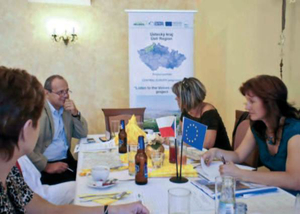
For the successful implementation of the project, it was necessary to involve a wide range of partners. There has been established a cooperation with Severočeské doly a.s., the associated partner which also involves a number of local partners: 32 municipalities, Czech Women’s Association, Podkrušnohorské Museum, research institutions, Economic and Social Council of the Ústí Region, Regional Economic Chamber, NGOs, regional enterprises with influence on the employment rate of the region, regional development agencies and many more.
RESULTS
1.) Change of image of the Ústí Region
The promotion of mining traditions and the personal experience of the visitors should make a significant change in the image of this region, well-known today as an industrial landscape and a territory affected by mining, where until now only a damaged "moonscape" could be seen. After the implementation of this pilot action, the visitor will see the open pits with his own eyes and a number of natural monuments and areas, which have been reclaimed and revitalized together with the beautiful landscape.
2.) Sustainability of the pilot action
The label of this touristic product was developed and the final product is involved in the offer of the regional project “Brána do Čech” (Gate to Bohemia) provided by the Krušnohoří Destination Management. The promotional spot is shown on the outdoor screen in the town of Most – where the Podkrušnohorské technical museum is also located, as a part of the developed routes. A promotional DVD will be uploaded on the websites of the Destination Krušnohoří and distributed in the cooperating info centres.
Re-Turn – Supporting return entrepreneurs in Usti Region (CZ)

Description
The Pilot Action of Ústí region in Czech Republic consists of 7 districts, 354 municipalities, located in the north-west Bohemia in the Czech Republic on the border with Germany. History CSR is still facing with the consequences of post-war changes and decrease in industrial production after 1990. It is a typical representative of structurally affected area and its structural problems are still increasing. Population CSR has a very specific age structure of the population. It is the Czech region with the youngest age structure. Per 100 inhabitants aged < 15 years, there are 91 inhabitants aged > 65 years (107,8 in average). But there is also an increasing group of the population aged > 65 years. Education CSR has the lowest level of education in CZ. There is the highest rate of the population with primary or incomplete education (27,3 % vs 23 % in average) and the smallest rate of higher educated people (8 % vs 15,5 %). Ethnic structure An important specificity is the ethnic structure of the population, which is relatively varied in comparison with a homogeneous structure of CZ. Mainly the high percentage of Roma ethnicity contributes to escalating of social tensions, crime and other social pathologies in CSR.
Objective
- Open a discussion and improve knowledge about returning migration among local and regional authorities and Labour Office, regional office in Ústí Region
- Analyze situation in returning migration in region
- Show to relevant subjects how to use hidden power and skills of returning migrants for region economic development
- Develop tools and services for supporting returning migrants
Activities
Main activity is the development of a whole self-employment "package" for returning emigrants – including entering advisory, job screening, training modules to set up own business and how to prepare a business plan and run the business, start-up coaching and mentoring by skilled entrepreneurs and providing of business incubator services. The service concept consists of 5 parts:
1. To reach returning emigrants through local labour offices, trade offices, promotion articles in social networks or local news. It will run continuously.
2. To contact training contact point and to get entering advisory through hot-line, email, phone or personally. It will run continuously.
3. To go through job screening for recognition suitable business in accordance with personal preferences and work experience. It will run about 1 week in small groups.
4. To go through the training course, there will be the possibility to attend the course personally in training contact points or through e-learning. It will run about 2 months/8 weeks in groups or e-learning individually.
5. To start-up business with skilled coaches and/or mentors and/or use a business incubator established in the training contact point in Most. It will run continuously during the course and after up to 1,5 months.
Results
We expect minimally 33 % of returned emigrants to attend the course and the service to start their business in CSR. Generally we expect increase of micro and small companies and renewal of entrepreneurship environment in Ústí Region.
CEC5 – Demonstration building: Social care institution in Lidman (CZ)
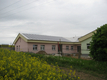
Technologies and measures are installed which aim at reaching energy savings and lowering energy demands of the future building:
- insulation folder around the building, which is composed of warming system on the basis of mineral insulation and of windows with triple insulation glass,
- the floor is equipped with a three-layer thermal insulation and heat line heating of the building is ensured by means of two air-water heat pumps, that enable regulated ventilation with heat recuperation roofing of the building.
It is designed as a hydroinsulating photovoltaic foil which generates electric power from solar energy. This innovative solution makes it possible to integrate thin-sized photovoltaic modules into the roof covering and thus to provide reliable protection from weather impacts in combination with achieving highly effective production of electric power from renewable source, while minimising performance losses. Such a technology can be used in a wide range of building types, including those that are not fit for installation of conventional solar panels. Works continue.
PAST NEWS
The building is situated in the location of the Institute for Social Care in Lidmaň. It replaced a previously existing building, which did not comply with the present construction, operational, sanitary, fire and esthetical demands anymore. The new building is a passive house built out of traditional brick materials with insulated folder. The heating is assured by means of a heat pump. The building serves for accommodation of the clients of the Institute for Social Care, Lidmaň. All following construction criteria are included:
– Minimization of energy release through the siding of the building
– Optimal use of the inner space
– Intensification of usage of locally available and renewable energy sources
– Emphasis on a high rate of comfort for building users
– The used technology will be on the top level (Best Available Technique).
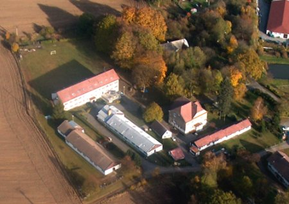
The building will be open each day during the working hours. There will be also installed 4 telemeters which make automatically measuring and showing the results on internet. All components of the investment (design, construction facilities, commissioning, etc.) will be part of one public procurement. The building should contain a heat pump for central heating system, solar collectors, photovoltaic modules, heat recovery unit for recuperation, insulated folder around the building.
ADAPT2DC – Cost effective innovative solutions on public property maintenance, energy savings by optimisation of public buildings in Usti region (CZ)
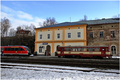
The area of Vejprty is the pilot region where due to fast depopulation after the 2nd World War a lot of historical public buildings, of which maintenance and related costs remained without meaningful use, burden the municipal budget excessively.
First it was necessary to open a tender for the services supplier which was held in April 2012 and in June of the same year a contract was signed with the selected entity. Based on the negotiations with experts and local regional representatives Vejprty as a pilot region was selected in October 2012 where buildings suitable for the Pilot Action purposes were located.
As a result of several negotiations between the services supplier and the local representatives, three buildings were identified built roughly in the same historical period, i.e. in 20th and 30th of the last century and none of them being listed. Each of the buildings has a different regime of usage. Performing energy audits including cards issuing, a study layout and time schedule for the activity implementation belong to the most important steps of the “Governance Model”.
In the first case the building, which had been originally used as an administrative building, was dealt with. It is currently partially used as a health centre, partially as a residential house. In March 2013 an energy audit was performed and the energy card for the building issued. Then a study layout was prepared relying on the effort of the Vejprty city management to centralize health care for wider Vejprty environment. The second energy audit together with the energy card assignment was prepared by the services supplier in August 2013. It is a building originally used as a recreation centre and totally idle at the moment. The prepared study layout with the agreement of the city representatives counts with the building being used as an administrative building for the business centre.
Finally the third audit and related documents were handed over for the House for Disabled People in Vejprty in September and October 2013. Current way of use should be, according to the study, preserved. It results from all the energy audits that it is necessary to invest to improve current conditions but these investment costs are not a part of the pilot action.
A document called “Proposal for Improvement of the Current Building Conditions” was issued by the services supplier generalizing results of the energy audits and serving as a guide for further decision-making to optimize energy costs and operation in the buildings of amenities.
In November 2013 before the final evaluation of the whole the Pilot Action from the ADAPT2DC project perspective a time schedule was proposed for the implementation of activities recommended based on the prepared studies of the buildings.
All activities within the sub-sections of the Pilot Action were discussed through the services supplier at the regular meetings with experts and representatives of the Vejprty city management. Now it is up to the local administration which way they align with the proposed measures and manage to evaluate the results of the Pilot Action towards improvement with respect to the on-going demographic changes.
Finally the project interest is for the final Governance model to be useful and transferable in the other Central Europe regions where similar problems as a consequence of demographic changes have been solved and are expected.